Showing posts with label St. Cuthbert. Show all posts

Thursday, March 20, 2025

Happy St. Cuthbert's Day!

Today is the saint's day of the original cuddy, St. Cuthbert of the Cudgel! Although the real world Cuthbert seems not to have used a cudgel at all; in this photo of one of his many miracles, he is clearly armed with a sword. If you find yourself near Hommlet today, swing by for the festivities.

St. Cuddy invents the 2x4.


Thursday, March 17, 2022

Happy St. Cuthbert's Day!

Well, not yet; it's on the 20th. But while you're chugging pints of Guinness, snarfing down bowls of Lucky Charms, and jumping around to the immortal words of House of Pain today on the most celebrated of saint's days, I'm gearing up for St. Cuthbert's big bash a few days hence. I did a quick search and found this interesting article about Cuddy's significance in Durham, England, where Cuthbert posthumously chose to rest after many years of wandering the countryside dodging Vikings and searching for cows. 

The article appears in The Palatinate which is the student newspaper of Durham University. The name Palatinate, it stands to reason, is a reference to the Palatinate that was originally granted to St. Cuthbert by King Ecgfrith in 684. It is said that Cuthbert still patrols the campus, knocking sense into the skulls of Oxbridge rejects with his mighty cudgel.  


Friday, March 20, 2015

Happy St. Cuthbert's Day!

I know you're all still recovering from ol' Paddy Snakebane's Festival of Greenery on Tuesday, but get your party hats back out because today marks the feast of St. Cuthbert!  Besides knocking back a pint or three of St. Cuthbert's IPA, you might consider celebrating by being nice to animals: Ol' Cuddy was famous for his rapport with the critters of the world.  Also, get in some cudgel practice whilst sporting your favorite chapeaux.

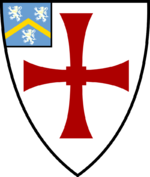
Not sure why he's in a boat in the photo above, but it's a somewhat common theme in non-Greyhawk Cuthbertian imagery. Check out his soccer team's crest (right).

Although Wanderers--along with the similarly themed Rovers and Rangers--is a fairly common team nickname for F.C.s in the British Isles* the name is especially appropriate for a club honoring ol' Cuddy; his posthumous wanderings are the stuff of legend.  For centuries after his death his remains were repeatedly moved from one hiding spot to another in order to avoid plundering by Minnesota Vikings.

* Despite all the Old Country emulation that goes on in MLS nomenclature--see the Uniteds, Reals, Dynamos, FCs, and, now, Cities, that clutter up the standings--no one has taken a shine to the Rovers/Rangers/Wanderers theme.  Wanderers is perhaps too desultory for modern tastes and Rangers is already taken by both a hockey and baseball team here in N. America, but Rovers, I think, would make for a damn fine futbol team.

Wednesday, March 20, 2013

Celebrate the Feast of St. Cuthbert

As all you hagiophiles already know March 20th marks the feast day of St. Cuthbert who died on this day in 687.  Greyhawkophiles will know St. Cuddy as one of the original deities of EGG's home campaign.  But here are a few things you might not have known about the patron saint of quality head-wear:

Banner of St. C: Where's the cudgel?
  • Good ol' Cuddy was probably ~53 years old when he died of an unspecified illness in his hermitage in Northumbria.
  • He began his monastic career only after serving in a war against the King of Mercia.  
  • After the war, Cuthbert arrived at the monastery of Melrose bearing a spear, not a cudgel.
  • In 664 he was named prior of the monastery at Lindisfarne which would later bear his name.  
  • Though he ultimately returned to Lindisfarne as Bishop, he spent much of the last decade or so of his life living as a hermit--not unlike a certain mad man in the environs of the Keep on the Borderlands.
  • His monastery would gain fame in 793 for being the first known location in the British Isles to be raided by Vikings.  Whether this event inspired the sacking of the monastery in the Sample Dungeon of the AD&D Dungeon Masters Guide cannot be known for certain.
  • St. Cuthbert's Gospel, based on the Codex of Grandior, is the oldest extant example of a "western binding."  Awesome, right? 
  • There are two caves in northeast England that bear his name.  Possibly they are named such because his sanctified remains were hidden in one or both of them to keep them safe from the Danes who continued to ravage the area for centuries.
  • Cuthbert's aforementioned gospel was also stashed in his coffin for safekeeping.  On a somewhat creepier note, so was the head of poor St. Oswald.
  • Once, after praying in the ocean, otters breathed on St. Cuthbert's cold feet to warm them up.
  • Two more Cuthberts were later canonized but, as is often the case, the sequels were not as cool as the original.
  • The Cuddy Duck is a species of waterfowl found in the vicinity of Lindisfarne. 
  • The "Liberty of St. Cuthbert's Lands" was a political entity in Northumberland that operated as a sovereign entity--a Palatinate--run by the Bishops of the vicinity.  According to Wikipedia, the people here were known as the haliwerfolc, meaning, rather literally, "holy man people", and it was believed that St. Cuthbert was "fiercely protective of his domain."  Inspiration for the See of Veluna?
  • An eagle once brought him some fish n' chips, which he shared with the eagle.
  • The Venerable Bede, a saint himself, wrote two hagiographies of Cuthbert.
  • Bede failed to mention Cuddy's affinity for hats in either tome.
  • St. Cuthbert's horse once interrupted his prayers to point out a delicious packet of bread and cheese stashed in a nearby roof.  Animals, apparently, couldn't help but give ol' Cuddy a hand.
  • It might just be a coincidence that the hermit in B2 K. on the B'lands had a protective pet puma.
  • Welsh Anglicans prefer to celebrate his feast day on Sept 4 while Episcopalians in The States pay their respects to ol' Cuddy on August 31.   Y'dey, Canoness of Hommlet, took it a step further instituting a 5 day celebration that spanned both dates.  

Thursday, October 18, 2012

Roman Polanski, the Sample Dungeon and the Cult of Cuthbert

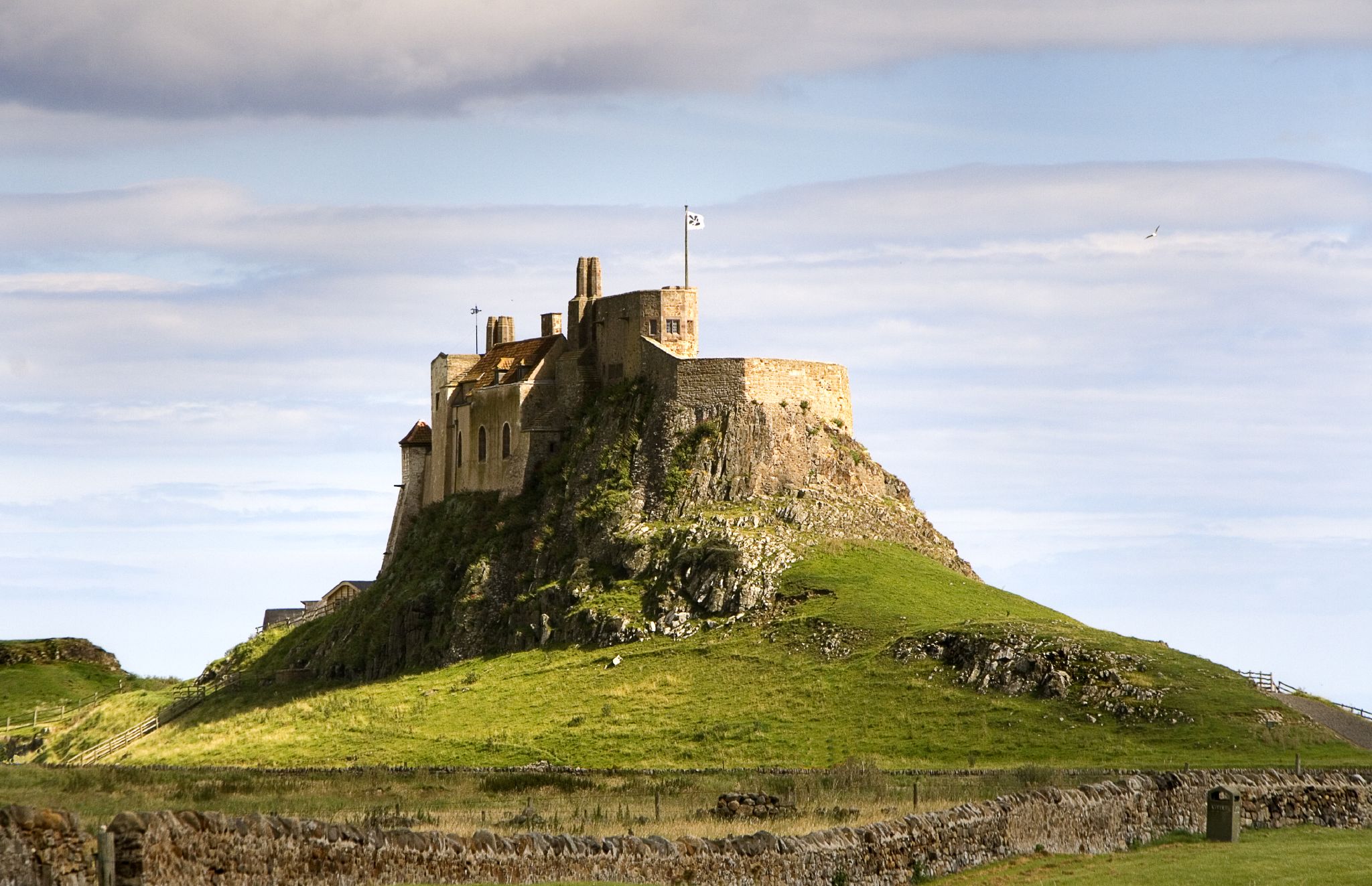
Ever heard of the Polanski flick Cul de Sac?  I didn't think I had either when the DVD showed up at my house the other day.  But there it was so I must have requested it, right?  Not knowing what possessed me to request this movie, I plunked it in the DVD player and gave it a whirl.  I fell asleep about 20 minutes into it--it had been a long long day; I should not have started a movie at midnight--but I did manage to see enough to figure out why it had made it to my queue: it was filmed on location at Lindisfarne, England--home to a monastery that has two claims to fame of interest to the likes of you and me:
  • Back in 793 AD, it was the site of the first recorded Viking raiding activity on the British Isles, and 
  • It was named after its former abbot, an Anglo-Saxon monk-turned-saint named Cuthbert.
The movie reminded me of another bit of information relevant to the Hommlet-Sample Dungeon milieu; the real world Monastery of St. Cuthbert, which was pillaged by ferocious raiders from across the water, is on the island of Lindisfarne which is accessible from the mainland via a causeway.  The monastery in the Sample Dungeon--likewise pillaged by raiders of unknown origins sometime in the past--was built on an island of sorts in a swamp which was accessible via a friggin' causeway.  Gygax was no doubt well aware of the history of the real St. Cuthbert and his monastery; could it be that the sample dungeon was intended to be a visit to St. Cuthbert's former earthly abode?

As for the flick, despite its name it has nothing to do with suburban street layout.  And despite its setting, it has nothing to do with monasteries or vikings.  Released in 1967, it's an arty flick about a gangster on the lam after a botched heist who forces a mismatched married couple who live alone on an island to keep him company while he waits for Godot. Hilarity ensues.